
Deinotherium Facts for Kids
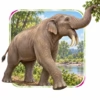
Deinotherium was a giant proboscidean that lived across Africa, Europe, and Asia for millions of years. It resembled an elephant in its column-like legs and trunk, but it had no long upper tusks. Instead, a pair of enlarged lower incisors curved downward and backward from the front of the jaw, creating one of the strangest heads in mammal history.
Quick Deinotherium Facts
- Animal Type: Extinct proboscidean mammal
- Group: Deinothere
- Known For: Downward-curving lower tusks, giant body, relatively flat skull, long neck, and early proboscidean branch
- Lived During: Miocene to Early Pleistocene, roughly 20–1 million years ago
- Diet: Leaves, twigs, bark, and other browse
What You’ll Learn
Learn 10 giant deinotherium facts for kids about downward-curving tusks, huge size, plant diets, and elephant relatives, with a quiz, glossary, and activity
These easy facts are written for kids, parents, teachers, and curious young animal lovers.
10 Fun Deinotherium Facts for Kids
1. Deinotherium Was a Proboscidean
Deinotherium belonged to Proboscidea, the mammal order containing living elephants and many extinct relatives.
Kid Decode: It joined the elephant reunion through a branch with its own remarkable tusk design.
2. Its Tusks Grew From the Lower Jaw
Unlike living elephants, Deinotherium carried its enlarged tusks in the lower jaw rather than the upper jaw.
Kid Decode: The tusk department moved downstairs and completely changed direction.
3. The Tusks Curved Downward
The paired lower incisors curved downward and backward like large hooks beneath the chin.
Kid Decode: Its face came with two enormous hooks pointing toward the ground.
4. It Lacked Long Upper Tusks
Deinotherium did not possess the huge projecting upper tusks familiar from elephants and mammoths.
Kid Decode: It became gigantic without copying the standard elephant accessory package.
5. The Tusk Function Is Debated
Scientists have proposed that the lower tusks stripped bark, pulled branches, dug roots, or helped manipulate vegetation, but no single use is proven.
Kid Decode: The hooks left several good clues and no surviving instruction manual.
6. Some Species Were Enormous
The largest Deinotherium species stood around 4 metres at the shoulder and may have weighed well over 10 tonnes, although estimates vary.
Kid Decode: It reached giant-land-mammal scale with room to spare above a modern elephant.
7. It Had a Trunk
Skull anatomy shows that Deinotherium possessed a muscular proboscis, though its exact length and shape remain uncertain.
Kid Decode: The trunk was real; the precise nose blueprint vanished with the soft tissue.
8. Its Skull and Neck Were Unusual
Compared with living elephants, Deinotherium had a flatter skull and a relatively long, mobile neck.
Kid Decode: Its head sat on more neck than the compact elephant silhouette might suggest.
9. It Was Mainly a Browser
Tooth shape and wear indicate that Deinotherium mostly ate leaves, twigs, and other vegetation from shrubs and trees.
Kid Decode: Its giant body ran on a menu gathered from the leafy level.
10. It Ranged Across Three Continents
Deinotherium fossils are known from Africa, Europe, and Asia, showing that the genus occupied a vast Old World range.
Kid Decode: Its fossil passport collected stamps across half the ancient world.
The Weirdest Deinotherium Fact
Deinotherium reversed the familiar elephant tusk pattern by growing enormous hooked tusks from its lower jaw while lacking long upper tusks.
Try This Deinotherium Activity
Deinotherium Drawing Activity
Draw Deinotherium browsing in a Miocene woodland. Add a giant elephant-like body, long columnar legs, relatively flat skull, flexible trunk, no long upper tusks, two huge lower tusks curving down and backward, leafy branches, bark, and a tusk-function question panel.
Quick Deinotherium Quiz
- Was Deinotherium a dinosaur? Answer: No, it was a proboscidean mammal.
- Where did its tusks grow? Answer: From the lower jaw.
- Which direction did the tusks curve? Answer: Downward and backward.
- How tall could the largest species stand? Answer: Around 4 metres at the shoulder.
- What did Deinotherium mainly eat? Answer: Leaves, twigs, bark, and other browse.
Mini Glossary
- Proboscidean: A mammal belonging to the order containing elephants and their extinct relatives.
- Deinothere: A member of an extinct early-diverging proboscidean family with downward-curving lower tusks.
- Incisor: A front tooth that can become enlarged into a tusk.
- Browser: An herbivore that eats leaves, twigs, bark, and shrubs.
- Proboscis: An elongated flexible nose or trunk.
 Lamb Facts for Kids
 Gila Monster Facts for Kids
 Hellbender Facts for Kids
 Dsungaripterus Facts for Kids
More Animal Facts for Kids
Visit the full animal facts library or explore a focused animal group.
More Extinct Animal Facts for Kids
Discover dinosaurs, Ice Age giants, prehistoric sea creatures, recently extinct species, and other animals from the past.
Fact check note: Fact checked with proboscidean body-size research, craniofacial and trunk-evolution reviews, Miocene deinothere studies, and fossil records from Africa, Europe, and Asia.

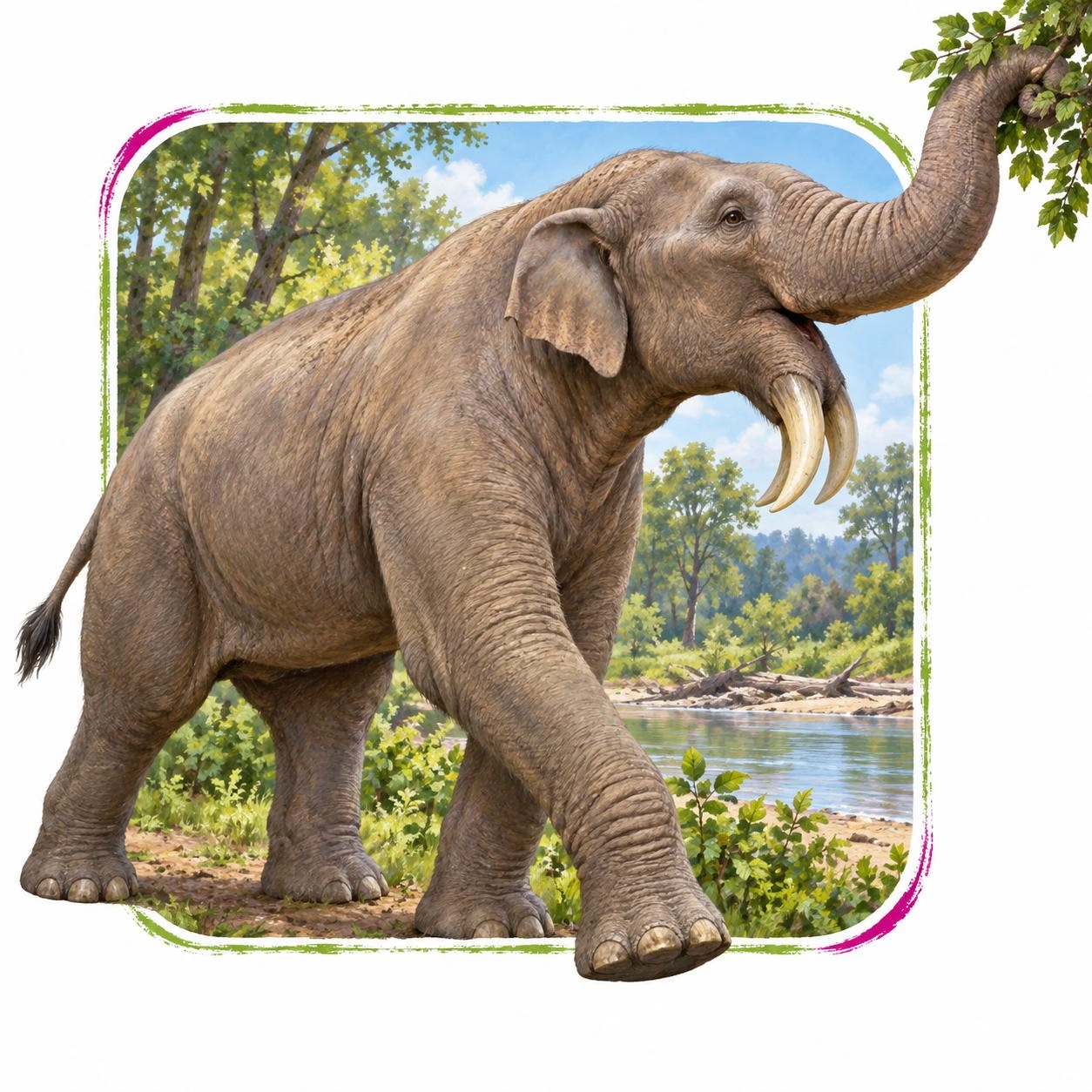
Deinotherium in its natural Miocene and Pliocene woodlands, forest edges, wooded floodplains, river valleys, savannas with browse, and terrestrial habitats across the Old World habitat