
Diplocaulus Facts for Kids
Diplocaulus was a strange aquatic tetrapod that lived in North American rivers and wetlands during the Late Carboniferous and Early Permian. It was not a dinosaur or a true modern salamander. Adults had an unmistakable boomerang-shaped skull formed by long sideways-projecting bones, while the rest of the body was flattened and equipped for swimming close to the bottom.
Quick Diplocaulus Facts
- Animal Type: Extinct amphibian-grade tetrapod
- Group: Nectridean lepospondyl
- Known For: Boomerang-shaped skull, long tabular horns, aquatic body, sensory grooves, and debated hydrodynamic function
- Lived During: Late Carboniferous to Early Permian, roughly 307–272 million years ago
- Diet: Small fish, aquatic invertebrates, and other small animals
What You’ll Learn
Learn 10 bizarre diplocaulus facts for kids about its boomerang-shaped head, flat body, swimming, freshwater habitats, and Permian life, plus a quiz, glossary, and activity
These simple facts are written for kids, parents, teachers, and curious young minds.
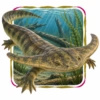
10 Fun Diplocaulus Facts for Kids
1. Diplocaulus Was Not a Dinosaur
Diplocaulus was a nectridean tetrapod from an extinct amphibian-grade branch often grouped among lepospondyls.
Kid Decode: It belonged to a very old water-loving branch with no dinosaur membership card.
2. Its Head Looked Like a Boomerang
Two long bony projections extended sideways and backward from the skull, producing its famous V-shaped outline.
Kid Decode: Its head looked ready to fly away while the rest of the animal stayed underwater.
3. The Horns Grew With Age
Young Diplocaulus had shorter, rounder skull corners, while mature individuals developed much longer tabular horns.
Kid Decode: The boomerang started small and became more dramatic with every growth stage.
4. It Grew About One Metre Long
Large Diplocaulus magnicornis individuals reached roughly 1 metre in total length.
Kid Decode: It was about yardstick length, with a surprising amount of width packed into the head.
5. It Was Built for Water
A flattened body, short limbs, and a long tail indicate that Diplocaulus spent much of its life swimming in rivers, ponds, and wetlands.
Kid Decode: Its body plan chose underwater cruising over long-distance hiking.
6. Its Skull May Have Produced Lift
Hydrodynamic experiments suggest that the broad skull could generate lift and help the animal rise or manoeuvre in moving water.
Kid Decode: The head may have worked like an underwater wing attached to a salamander-shaped body.
7. New Models Suggest Bottom-Hugging Swimming
Recent computer-flow studies suggest that Diplocaulus may have swum efficiently and manoeuvred close to the river or lake bottom.
Kid Decode: It may have skimmed the underwater floor like a boomerang-headed hovercraft.
8. The Wide Head May Have Discouraged Predators
Another hypothesis proposes that the skull made adults difficult for large predators to swallow, though this was probably not its only function.
Kid Decode: A mouthful shaped like a coat hanger is a challenging snack.
9. Sensory Grooves Covered the Skull
Channels on the skull likely housed a lateral-line system that detected vibrations and pressure changes in water.
Kid Decode: Its boomerang head may also have been a broad underwater motion detector.
10. It Hunted Small Aquatic Prey
Diplocaulus probably ate small fish, crustaceans, insects, worms, and other animals living near the bottom.
Kid Decode: Its menu came from the muddy neighbourhood beneath the water.
The Weirdest Diplocaulus Fact
Its boomerang-shaped skull may have acted as an underwater lifting surface, a steering aid, and a defense against being swallowed.
Try This Diplocaulus Activity
Diplocaulus Drawing Activity
Draw Diplocaulus swimming close to a Permian river bottom. Add a wide boomerang-shaped skull, long tabular horns, sensory grooves, a flat body, short limbs, a long tail, small fish, crustaceans, muddy sediment, water-flow arrows, and a juvenile with much shorter skull horns.
Quick Diplocaulus Quiz
- Was Diplocaulus a dinosaur? Answer: No, it was an amphibian-grade tetrapod.
- What shape was its adult skull? Answer: Boomerang-shaped or V-shaped.
- How long did large individuals grow? Answer: About 1 metre.
- What may the broad skull have generated in moving water? Answer: Hydrodynamic lift.
- What did Diplocaulus probably eat? Answer: Small fish, aquatic invertebrates, and other small prey.
Mini Glossary
- Nectridean: A member of an extinct group of slender aquatic tetrapods.
- Lepospondyl: A traditional name for several groups of small Paleozoic tetrapods.
- Tabular Horn: A long projection formed from a bone at the rear of the skull.
- Hydrodynamic Lift: Upward force produced as water flows around a body.
- Lateral Line: A sensory system that detects movement and pressure changes in water.
 Crocodile Facts for Kids
 Fiddler Crab Facts for Kids
 Toucan Facts for Kids
 Ambulocetus Facts for Kids
More Animal Facts for Kids
Visit the full animal facts library or explore a focused animal group.
More Extinct Animal Facts for Kids
Discover dinosaurs, Ice Age giants, prehistoric sea creatures, recently extinct species, and other animals from the past.
Fact check note: Fact checked with classic Diplocaulus hydrodynamic-model experiments, recent computational fluid-dynamics studies of near-bottom swimming, skull-growth research, and Permian nectridean fossil records.

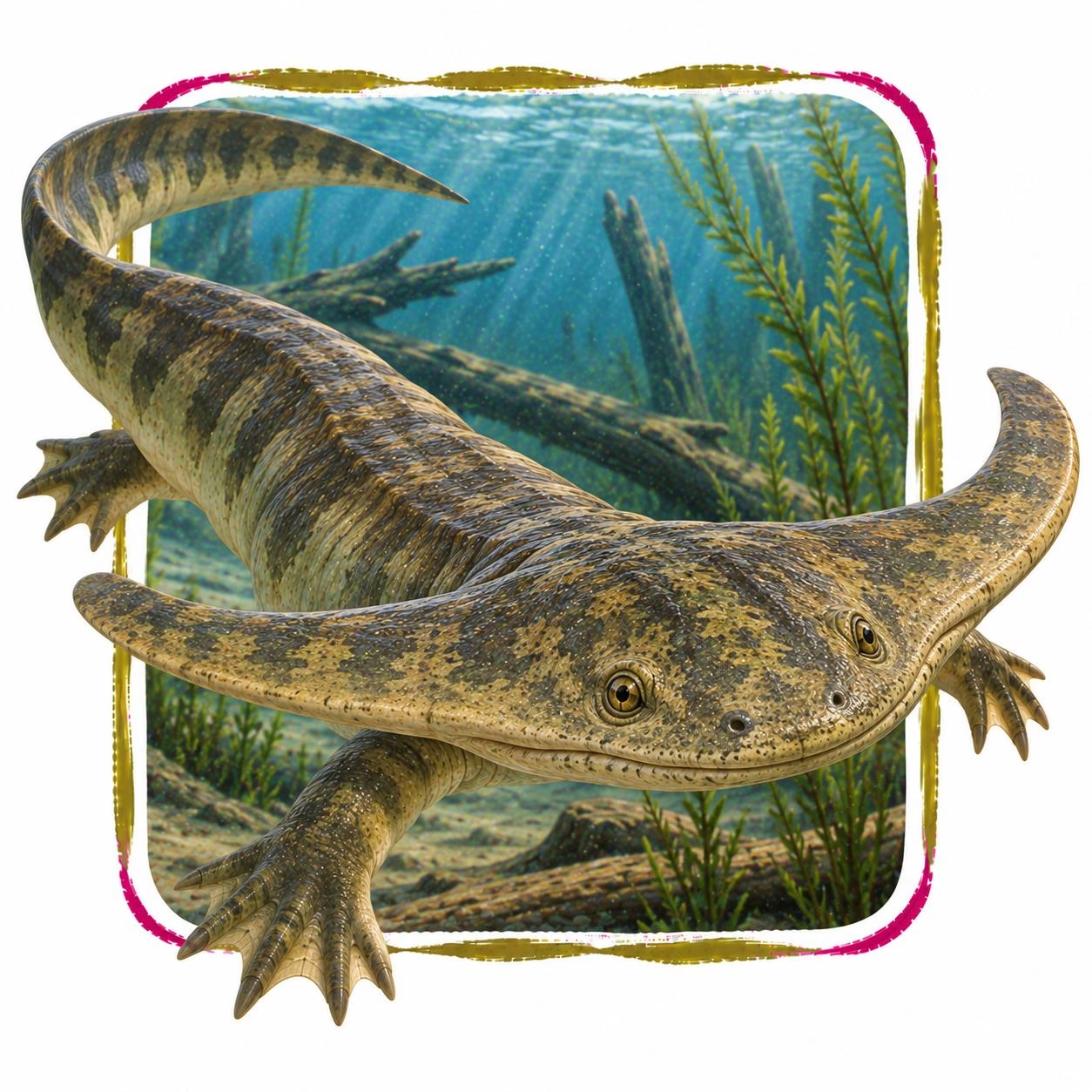
Diplocaulus in its natural Late Carboniferous and Early Permian rivers, ponds, floodplain wetlands, muddy lake bottoms, seasonal waterways, and freshwater habitats of North America habitat