
Gorgonops Facts for Kids
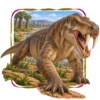
Gorgonops was a saber-toothed gorgonopsian therapsid that hunted in what is now South Africa during the Late Permian. It was not a dinosaur or a mammal, but it belonged to the synapsid branch that later produced mammals. A long skull, enlarged upper canines, sharp incisors, and strong land-going limbs made it a dangerous medium-sized predator.
Quick Gorgonops Facts
- Animal Type: Extinct predatory therapsid
- Group: Gorgonopsian synapsid
- Known For: Saber-like canines, replacement teeth, long skull, strong limbs, and South African fossils
- Lived During: Late Permian, roughly 260–254 million years ago
- Diet: Small and medium-sized terrestrial vertebrates
What You’ll Learn
Explore 10 fierce gorgonops facts for kids about saber-like teeth, powerful jaws, hunting, and Permian life, plus a quiz, glossary, and activity
Simple explanations make them great for kids, families, teachers, and young fossil fans.
10 Fun Gorgonops Facts for Kids
1. Gorgonops Was a Gorgonopsian
Gorgonops belonged to Gorgonopsia, a group of predatory therapsids famous for long skulls and enlarged saber-like canine teeth.
Kid Decode: It was one of the original members of the Permian saber-tooth club.
2. It Was Not a Dinosaur
Gorgonops lived tens of millions of years before the first dinosaurs and belonged to the mammal-line synapsid branch.
Kid Decode: The dinosaurs had not arrived, but the dramatic teeth were already on stage.
3. It Lived in South Africa
Fossils of Gorgonops are known from Late Permian rocks of the Karoo Basin in South Africa.
Kid Decode: Its ancient hunting ground later became one of the world’s richest fossil landscapes.
4. Species Varied in Size
Species assigned to Gorgonops ranged roughly from 1.2 to 2 metres long, while Gorgonops torvus was among the smaller members of the genus.
Kid Decode: The name covered predators from big-dog length to nearly human-height nose to tail.
5. It Had Saber-Like Canines
A pair of enlarged upper canine teeth projected below the rest of the tooth row and helped stab or slash prey.
Kid Decode: Its mouth came with two Permian carving blades.
6. It Grew Replacement Canines
Like other gorgonopsians, Gorgonops could develop new canines beside or behind working ones before worn teeth were shed.
Kid Decode: Even the sabers had understudies waiting behind the curtain.
7. Its Front Teeth Gripped Prey
Sharp incisors at the front of the jaws helped seize flesh, while smaller postcanine teeth continued the cutting work farther back.
Kid Decode: The whole tooth row worked as a grip-and-slice toolkit.
8. A Nearly Complete Skeleton Was Studied
A 2023 study described a nearly complete, semi-articulated skeleton of Gorgonops torvus, revealing rare details of its ribs, limbs, feet, and trunk.
Kid Decode: Most gorgonopsians arrive as skulls; this one brought much more of the body.
9. It May Have Used Short Ambush Chases
Its skeleton has been interpreted as belonging to a terrestrial predator suited to ambushing prey and pursuing it over short distances.
Kid Decode: It was probably built for a sudden Permian sprint rather than an endless marathon.
10. Its Name Means Gorgon Face
Gorgonops combines the mythological Gorgon with a Greek word for face or appearance.
Kid Decode: Its scientific name sounds exactly as fierce as the skull looks.
The Weirdest Gorgonops Fact
Gorgonops replaced its giant canine teeth, so a new saber could be developing while the old one was still working.
Try This Gorgonops Activity
Gorgonops Drawing Activity
Draw Gorgonops stalking across a Late Permian South African floodplain. Add a long skull, enlarged saber canines, sharp front teeth, sturdy limbs, a long tail, small herbivore prey, dry river channels, and a replacement-canine cutaway.
Quick Gorgonops Quiz
- Was Gorgonops a dinosaur? Answer: No, it was a gorgonopsian therapsid.
- Where did it live? Answer: South Africa.
- What were its most famous teeth? Answer: Enlarged saber-like upper canines.
- Could it replace those canines? Answer: Yes, new canines developed before old ones were lost.
- What does Gorgonops mean? Answer: Gorgon face or Gorgon appearance.
Mini Glossary
- Gorgonopsian: A saber-toothed predatory therapsid from the Permian Period.
- Therapsid: A synapsid from the broad evolutionary branch containing mammals.
- Canine Tooth: A pointed tooth used for gripping, stabbing, or slicing prey.
- Postcanine: A tooth positioned behind the canine.
- Karoo Basin: A fossil-rich region of southern Africa containing many Permian and Triassic rocks.
 Snow Leopard Facts for Kids
 Wrasse Facts for Kids
 Pilot Whale Facts for Kids
 Pyrenean Ibex Facts for Kids
More Animal Facts for Kids
Visit the full animal facts library or explore a focused animal group.
More Extinct Animal Facts for Kids
Discover dinosaurs, Ice Age giants, prehistoric sea creatures, recently extinct species, and other animals from the past.
Fact check note: Fact checked with Bendel and colleagues’ 2023 postcranial study of Gorgonops torvus, Kermack’s tooth-replacement research, modern gorgonopsian jaw studies, and South African Karoo fossil records.

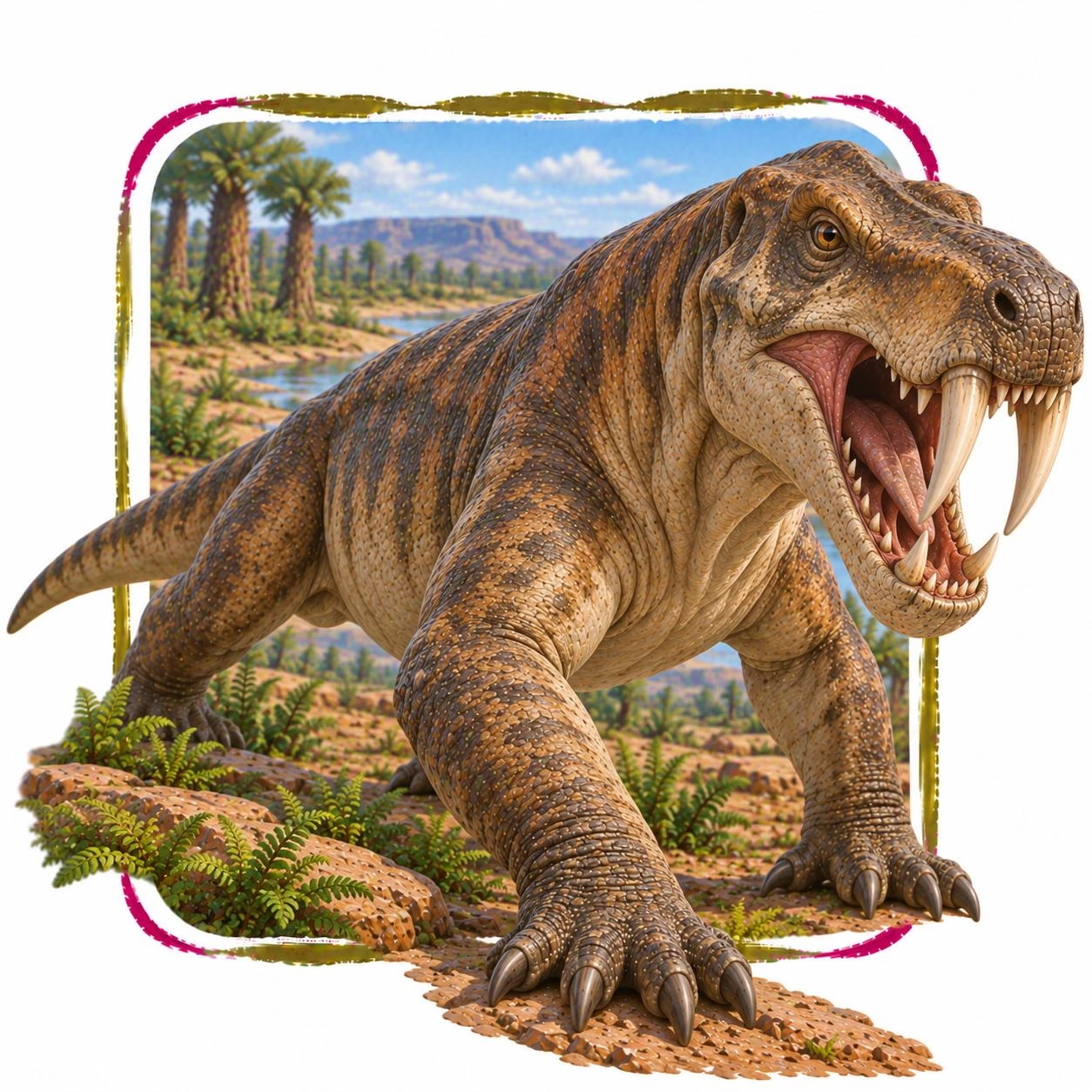
Gorgonops in its natural Late Permian river floodplains, seasonal dry plains, wooded lowlands, scrubby valleys, and terrestrial habitats of the South African Karoo habitat