
Istiodactylus Facts for Kids
Istiodactylus was a large pterosaur from the Early Cretaceous of England. It was not a dinosaur. Its short, broad snout carried tightly packed, blade-like teeth that formed a slicing edge near the front of the jaws. Many scientists think this unusual mouth was better for cutting flesh from carcasses than for catching slippery fish.
Quick Istiodactylus Facts
- Animal Type: Flying reptile
- Group: Istiodactylid pterosaur
- Known For: Broad rounded snout, up to 48 blade-like teeth, interlocking tooth row, Isle of Wight fossils, and a possible scavenging lifestyle
- Lived During: Early Cretaceous, about 120 million years ago
- Diet: Meat, probably including carrion
What You’ll Learn
Discover 10 fascinating istiodactylus facts for kids about its unusual teeth, broad wings, long jaws, feeding, and Cretaceous skies, with a quiz, glossary, and activity
Clear explanations make them fun for children, families, teachers, and little fact-hunters.
10 Fun Istiodactylus Facts for Kids
1. Istiodactylus Was a Pterosaur
Istiodactylus was a flying reptile, not a dinosaur, although it lived during the age of dinosaurs.
Kid Decode: It crossed dinosaur skies with a completely different branch on the reptile family tree.
2. It Lived on the Isle of Wight
Its best-known fossils come from Early Cretaceous rocks on the Isle of Wight in southern England.
Kid Decode: This pterosaur left its calling card on one of Britain’s most famous fossil islands.
3. It Had a Broad Rounded Snout
The front of the skull was unusually short, wide, low, and rounded compared with the long pointed jaws of many other pterosaurs.
Kid Decode: Its face looked less like a spear and more like a flying meat scoop.
4. It Had Up to 48 Teeth
Istiodactylus latidens had no more than 48 teeth, all crowded near the front part of the jaws.
Kid Decode: The back of the mouth stayed tooth-free while the front handled the slicing work.
5. Its Teeth Formed a Razor Edge
The short triangular teeth were flattened from side to side and fitted closely together, creating a cutting edge.
Kid Decode: Its smile was less picket fence and more prehistoric pastry cutter.
6. It May Have Been a Scavenger
Its broad muzzle and slicing teeth suggest that it may have torn pieces of meat from large carcasses, rather like a flying scavenger.
Kid Decode: It may have searched the landscape for leftovers too large to fit in one bite.
7. It Probably Was Not a Fish Specialist
The teeth were unlike the long, curved fish-grabbing teeth of many fish-eating pterosaurs, so regular fishing may not have been its main job.
Kid Decode: Those teeth were built for slicing, not for pinning a slippery fish.
8. Its Skull Was Shorter Than Once Thought
A re-examined jaw fragment showed that the skull was probably around 45 centimetres long, much shorter and taller than older reconstructions suggested.
Kid Decode: One overlooked fossil piece gave the whole head a surprise makeover.
9. It Had Long Wings and Short Hind Limbs
Istiodactylus had powerful forelimbs supporting its wings, while its hind limbs were relatively short.
Kid Decode: It was mostly wing up front and compact landing gear behind.
10. Its Name Means Sail Finger
The name Istiodactylus comes from Greek words meaning sail and finger, referring to the long wing finger that supported the flight membrane.
Kid Decode: Its scientific name gives the wing finger top billing.
The Weirdest Istiodactylus Fact
Istiodactylus may have been one of the closest things the pterosaur world had to a vulture, using razor-like teeth to slice meat from carcasses.
Try This Istiodactylus Activity
Istiodactylus Drawing Activity
Draw Istiodactylus soaring over an Early Cretaceous Isle of Wight floodplain. Add a short broad snout, tightly interlocking triangular teeth, long wings, short hind limbs, a dinosaur carcass below, river channels, conifers, fossil cliffs, and a “flying scavenger?” label.
Quick Istiodactylus Quiz
- Was Istiodactylus a dinosaur? Answer: No, it was a pterosaur.
- Where were its best-known fossils found? Answer: The Isle of Wight in England.
- What shape was its snout? Answer: Short, broad, and rounded.
- What may it have eaten? Answer: Meat, including carrion.
- How many teeth did Istiodactylus latidens have at most? Answer: About 48.
Mini Glossary
- Pterosaur: A flying reptile that lived during the age of dinosaurs.
- Istiodactylid: A member of a pterosaur family with broad snouts and specialised teeth.
- Carrion: The remains of a dead animal eaten by scavengers.
- Rostrum: The snout or front part of a skull.
- Interlocking Teeth: Teeth that fit closely between one another when the jaws close.
 Chinstrap Penguin Facts for Kids
 Egret Facts for Kids
 King Penguin Facts for Kids
 Gigantopithecus Facts for Kids
More Animal Facts for Kids
Visit the full animal facts library or explore a focused animal group.
More Extinct Animal Facts for Kids
Discover dinosaurs, Ice Age giants, prehistoric sea creatures, recently extinct species, and other animals from the past.
Fact check note: Fact checked with Witton’s 2012 PLOS ONE skull reconstruction and scavenging analysis, Howse, Milner and Martill’s Isle of Wight pterosaur work, and later research on Istiodactylus jaw anatomy.

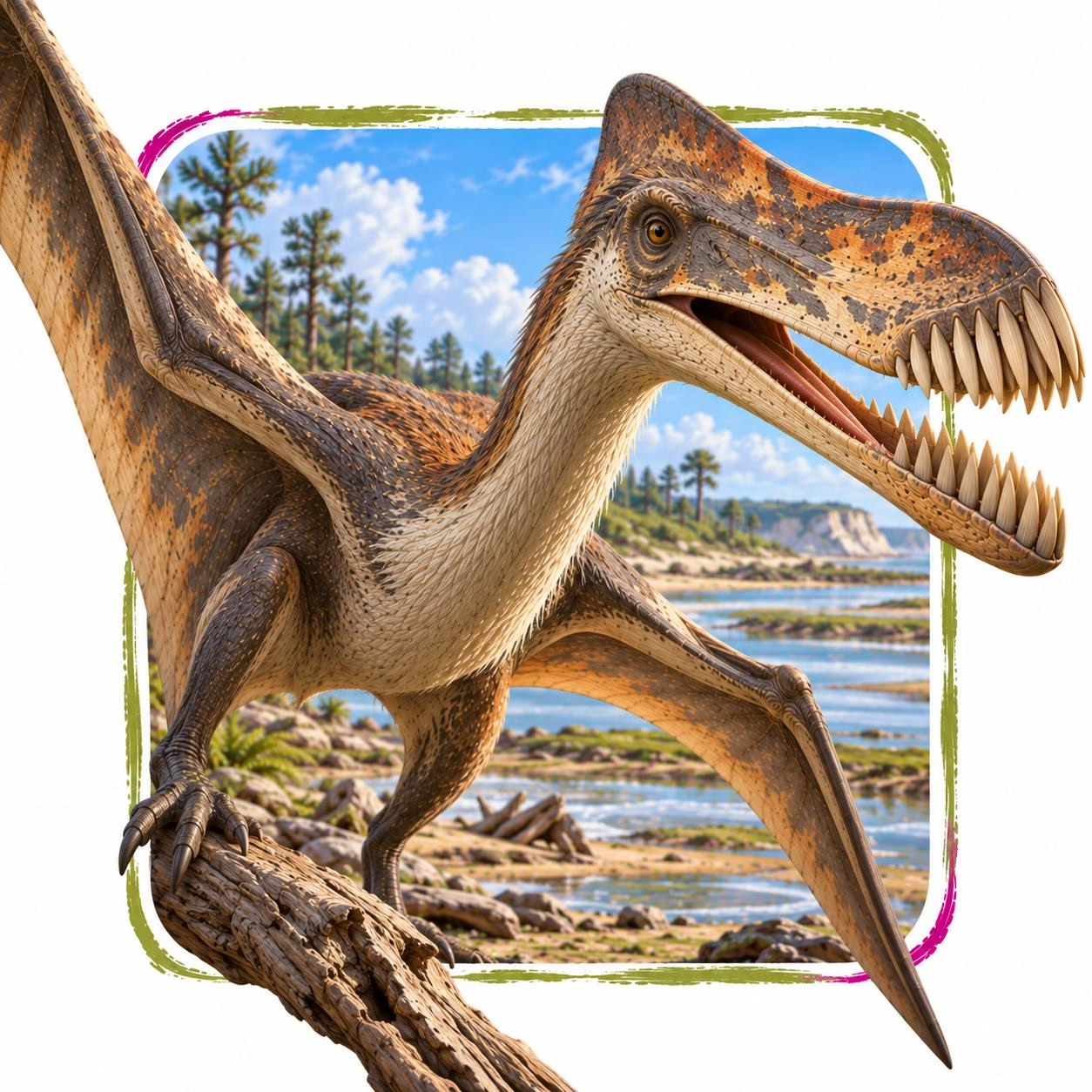
Istiodactylus in its natural Early Cretaceous river floodplains, coastal lagoons, tidal flats, wooded lowlands, freshwater channels, and semi-arid landscapes of the Isle of Wight habitat