
Mylodon Facts for Kids
Mylodon darwinii was a large ground sloth that lived in South America during the Pleistocene. It grew about three metres long and may have weighed roughly one to two tonnes. Unlike tree sloths, Mylodon walked on the ground, carried powerful claws, wore long shaggy fur, and had small bony plates embedded inside parts of its thick skin. Exceptional cave finds in Patagonia preserve skin, hair, dung, bones, and DNA, making Mylodon one of the best-known extinct ground sloths.
Quick Mylodon Facts
- Animal Type: Mammal
- Group: Mylodontid ground sloth
- Known For: Shaggy preserved skin, dermal armor, giant claws, fossil dung, and Darwin’s specimen
- Lived During: Pleistocene into the end of the last Ice Age
- Diet: Mainly grasses, sedges, and other plants, with disputed evidence for occasional animal protein
What You’ll Learn
Learn 10 giant mylodon facts for kids about huge claws, thick skin, plant diets, powerful bodies, and Ice Age life, with a quiz, glossary, and activity
These facts are explained simply for kids, parents, teachers, and curious young minds.
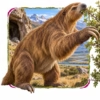
10 Fun Mylodon Facts for Kids
1. Darwin Collected the Naming Fossil
Charles Darwin collected a large lower jaw at Punta Alta in Argentina during the voyage of HMS Beagle in 1832. Richard Owen later described the animal and named Mylodon darwinii in Darwin’s honour.
Kid Decode: One jaw from Darwin’s fossil beach eventually gave a giant sloth both a name and a celebrity connection.
2. It Was a Ground Sloth, Not a Tree Sloth
Mylodon belonged to the sloth branch of mammals but was far too large and heavy for life hanging in trees. It walked across grasslands, scrub, and cold Patagonian landscapes on the ground.
Kid Decode: This sloth traded branches for an Ice Age landscape large enough to carry a tonne-sized walker.
3. It Reached Roughly Three Metres Long
Reconstructions place Mylodon at about three metres from head to tail, with mass estimates often around one to two tonnes. Exact size differed among individuals and remains under study.
Kid Decode: The shaggy ground sloth filled roughly the length of a small car without being built like one.
4. Powerful Limbs Carried Huge Claws
Strong limbs and curved claws could have helped with walking, pulling vegetation, defence, and manipulating food. Its posture and movement were unlike those of a modern bear despite superficial reconstruction similarities.
Kid Decode: The claws were multipurpose Ice Age tools rather than climbing hooks for a giant tree sloth.
5. Its Skin Contained Tiny Bone Plates
Small osteoderms were scattered within portions of the thick hide. These bony pieces did not form a rigid armadillo shell but may have provided extra protection against predators.
Kid Decode: The shaggy coat concealed a loose sprinkle of armor inside the skin.
6. Patagonian Caves Preserved Fur and Dung
Cold, dry cave conditions preserved pieces of reddish or yellow-brown skin, long hair, and large dung deposits. Some remains looked so fresh that early explorers wondered whether Mylodon might still survive.
Kid Decode: The cave freezer kept an extinct animal’s coat and droppings looking suspiciously recent.
7. Fossil Dung Reveals a Plant-Rich Menu
Coprolites contain abundant grasses and sedges, along with pollen from other plants. This evidence shows that vegetation formed the core of the diet and that Mylodon could feed selectively within open Patagonian environments.
Kid Decode: The fossil droppings arrived with an Ice Age salad list still tucked inside.
8. Possible Omnivory Is Debated
Amino-acid isotope analysis of preserved hair suggested that Mylodon may occasionally have consumed animal protein, perhaps eggs or scavenged meat. Plant remains in dung remain strong evidence for a mostly plant-based diet, so scientists continue testing the interpretation.
Kid Decode: The menu was definitely green at its centre, with one disputed protein side dish.
9. It Shared South America With People
Mylodon survived late enough to overlap with the first human populations in southern South America. Bones occur at archaeological sites, but each association must be studied carefully before claiming hunting or butchery.
Kid Decode: Humans and giant sloths entered the same final chapters, leaving archaeologists to inspect every mark.
10. Climate and People May Both Have Mattered
Mylodon disappeared near the Pleistocene–Holocene transition as climate, vegetation, and human activity changed. No single cause explains every South American megafaunal extinction, and the importance of hunting versus environmental change remains debated.
Kid Decode: The last ground sloths faced several closing doors instead of one simple extinction switch.
The Weirdest Mylodon Fact
Pieces of Mylodon skin and dung from a Patagonian cave looked so fresh that early twentieth-century expeditions searched remote valleys for living giant ground sloths.
Try This Mylodon Activity
Mylodon Cave-Fossil Drawing Activity
Draw Mylodon walking outside a cold Patagonian cave. Add a bulky shaggy body, powerful limbs, long claws, reddish-brown hair, a skin cutaway showing scattered osteoderms, grass and sedges, fossil dung with pollen clues, Darwin examining a jaw, and separate panels showing human overlap and the debate over occasional scavenging.
Quick Mylodon Quiz
- Who collected the jaw used to name Mylodon darwinii? Answer: Charles Darwin.
- Was Mylodon a tree-dwelling sloth? Answer: No, it was a giant ground sloth.
- What were osteoderms? Answer: Small bony plates embedded in its skin.
- What do its coprolites contain? Answer: Mostly grasses, sedges, pollen, and other plant remains.
- Is occasional meat eating proven beyond debate? Answer: No, isotope evidence suggests it, but the interpretation remains debated.
Mini Glossary
- Mylodontid: A member of the extinct ground-sloth family Mylodontidae.
- Osteoderm: A small bony plate embedded within the skin.
- Coprolite: Fossilised or ancient preserved dung.
- Isotope: A form of an element that scientists can measure to investigate diet or environment.
- Holotype: The specimen used as the name-bearing example of a species.
 Kangaroo Facts for Kids
 Spotted Hyena Facts for Kids
 Milk Snake Facts for Kids
 Livyatan Facts for Kids
More Animal Facts for Kids
Visit the full animal facts library or explore a focused animal group.
More Extinct Animal Facts for Kids
Discover dinosaurs, Ice Age giants, prehistoric sea creatures, recently extinct species, and other animals from the past.
Fact check note: Fact checked with the Natural History Museum’s Mylodon darwinii collection resources, published analyses of Mylodon Cave coprolites and pollen, ancient DNA studies, amino-acid isotope research on preserved hair, and archaeological and palaeoecological studies of Late Pleistocene Patagonia.

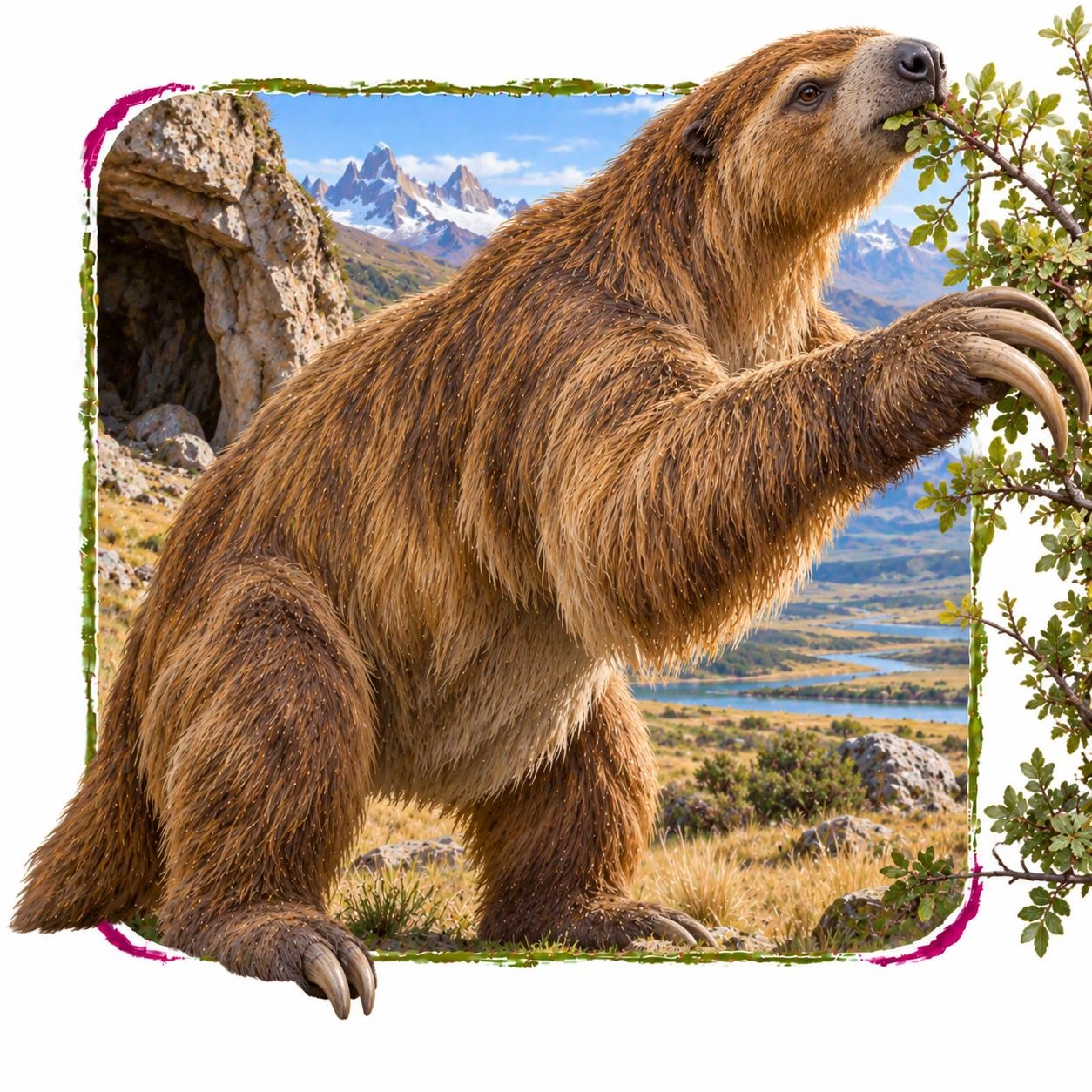
Mylodon in its natural Cold steppe, grasslands, scrub, open woodland, river valleys, and cave-rich Patagonian landscapes across southern South America habitat