
Wiwaxia Facts for Kids
Wiwaxia was a small, soft-bodied animal that crawled across Cambrian seafloors more than 500 million years ago. Its back was protected by overlapping scale-like sclerites and two rows of long spines, while its underside had a broad slug-like foot. A tiny toothed feeding apparatus probably scraped algae and microbial films from the seafloor, but scientists still debate whether Wiwaxia was closer to early molluscs, annelid worms, or their shared relatives.
Quick Wiwaxia Facts
- Animal Type: Extinct marine invertebrate
- Group: Problematic lophotrochozoan, possibly near early molluscs
- Known For: Overlapping sclerites, paired rows of long spines, slug-like foot, and a tiny toothed feeding apparatus
- Lived During: Middle Cambrian, about 505 million years ago
- Diet: Probably algae, microbial mats, and other organic films
What You’ll Learn
Discover 10 spiky wiwaxia facts for kids about armored scales, long spines, soft bodies, feeding, and Cambrian seafloors, with a quiz, glossary, and activity
Clear explanations make them ideal for children, families, teachers, and little fact-hunters.
10 Fun Wiwaxia Facts for Kids
1. Wiwaxia Was Not a Dinosaur
Wiwaxia was a tiny soft-bodied marine animal from the Cambrian Period, long before the first dinosaurs appeared.
Kid Decode: It finished its entire fossil career hundreds of millions of years before dinosaur auditions began.
2. It Grew to About Five Centimetres
Large Wiwaxia corrugata specimens reached roughly 5 to 5.5 centimetres long, while many individuals were much smaller.
Kid Decode: A full-grown one could fit across the palm of a child’s hand.
3. Its Back Was Covered in Sclerites
Dozens of overlapping, scale-like pieces called sclerites protected most of the upper body.
Kid Decode: Its armor looked like a roof made from tiny leaf-shaped tiles.
4. It Carried Two Rows of Long Spines
Adults bore two rows of about 7 to 11 blade-like spines along the back, probably helping discourage predators.
Kid Decode: The back came with a pair of natural “please do not bite” signs.
5. Its Underside Was Soft
The belly lacked armor and probably formed a broad muscular foot that helped Wiwaxia creep over the seafloor.
Kid Decode: Armored upstairs, soft slipper downstairs.
6. It Had Rows of Tiny Teeth
Near the front of the gut was a feeding apparatus with two, and rarely three, rows of backward-pointing teeth.
Kid Decode: Its mouth carried a miniature scraping belt hidden beneath all that armor.
7. It Probably Grazed the Seafloor
The toothed mouthparts likely scraped algae, microbes, and organic films from surfaces or soft sediment.
Kid Decode: Wiwaxia may have mowed microscopic lawns no human eye could see.
8. Its Family Position Is Debated
Its foot and mouth resemble molluscan features, while its spines and sclerites have also been compared with annelid worms.
Kid Decode: This little fossil has spent decades bouncing between branches of the animal family tree.
9. Young Wiwaxia Changed Their Armor
Small juveniles had fewer sclerites, and the longest defensive spines appeared only after the animals reached a certain size.
Kid Decode: Baby armor began as the starter pack before the dramatic spikes arrived.
10. Hundreds of Fossils Are Known
Wiwaxia is one of the better-known Burgess Shale animals, with hundreds of articulated specimens and many isolated sclerites.
Kid Decode: For a soft-bodied animal, it left paleontologists an unusually generous fossil scrapbook.
The Weirdest Wiwaxia Fact
Wiwaxia combined a slug-like foot, a tooth-covered feeding ribbon, overlapping armor scales, and long defensive spines in one animal whose exact relatives are still debated.
Try This Wiwaxia Activity
Wiwaxia Drawing Activity
Draw Wiwaxia crawling over a Cambrian seafloor. Add an oval slug-like body, overlapping leaf-shaped sclerites, two rows of long blade-like spines, a soft flat foot, a tiny tooth-row diagram, microbial mats, sponges, and a ruler showing its 5-centimetre size.
Quick Wiwaxia Quiz
- Was Wiwaxia a dinosaur? Answer: No, it was a small Cambrian marine animal.
- How large could it grow? Answer: About 5 to 5.5 centimetres long.
- What protected its back? Answer: Overlapping sclerites and long spines.
- What did it probably eat? Answer: Algae, microbial mats, and other organic films.
- Why is its classification debated? Answer: It combines features compared with both molluscs and annelid worms.
Mini Glossary
- Sclerite: A small hard or tough plate forming part of an animal’s outer covering.
- Lophotrochozoan: A large animal group that includes molluscs and annelid worms.
- Radula-Like Apparatus: A toothed feeding structure compared with the scraping ribbon of molluscs.
- Microbial Mat: A layered community of tiny organisms growing on a surface.
- Burgess Shale: A Canadian fossil deposit famous for preserving soft-bodied Cambrian animals.
 Bushpig Facts for Kids
 Goat Facts for Kids
 Thomson's Gazelle Facts for Kids
 Proconsul Facts for Kids
More Animal Facts for Kids
Visit the full animal facts library or explore a focused animal group.
More Extinct Animal Facts for Kids
Discover dinosaurs, Ice Age giants, prehistoric sea creatures, recently extinct species, and other animals from the past.
Fact check note: Fact checked with Conway Morris’s 1985 Wiwaxia monograph, Smith’s 2012 mouthpart study, Zhang and colleagues’ 2015 scleritome reconstruction, and Royal Ontario Museum Burgess Shale resources.

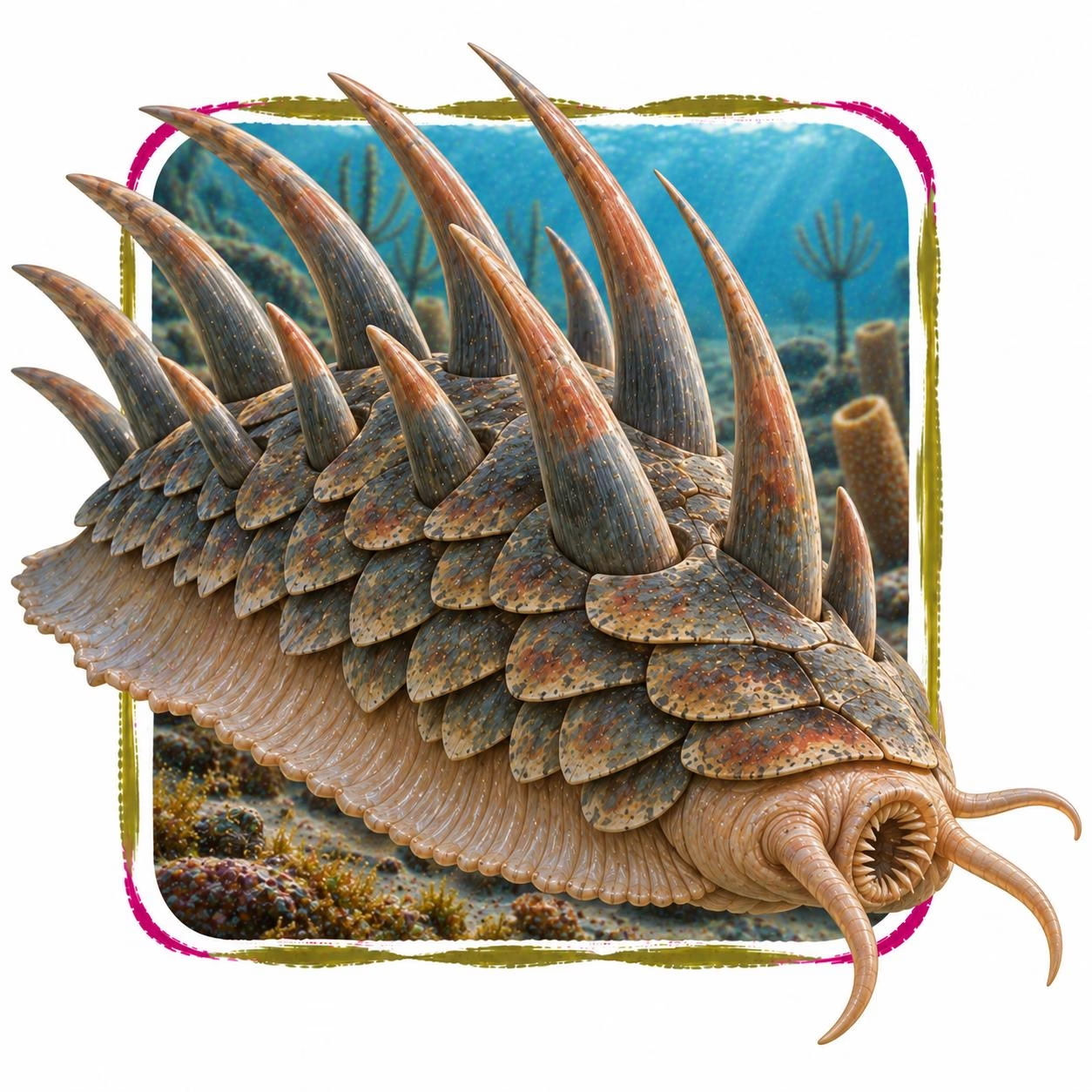
Wiwaxia in its natural Middle Cambrian muddy seafloors, microbial mats, sponge communities, quiet offshore shelf habitats, and low areas above soft marine sediment habitat