
Alpaca vs Vicuña: Domestic and Wild Andean Camelid Comparison
Alpacas and vicuñas are close Andean camelid relatives, but one is domestic and the other is wild. Andean communities developed the alpaca thousands of years ago through selective breeding strongly influenced by the vicuña, creating a manageable herd animal with abundant fleece in many colors. The smaller tawny vicuña remains a free-ranging high-puna specialist with extraordinarily fine fiber, long legs, sharp senses, and great speed. Both lack humps, walk on padded two-toed feet, graze mountain plants, bear babies called crias, and rely on companions, yet people should never treat a wild vicuña like a farm alpaca.
About Alpaca
- Type Mammal
- Diet Strict herbivorous grazer feeding mainly on grasses and, in human care, suitable pasture, hay, and carefully balanced supplemental feed
- Group Domestic Alpaca (Vicugna pacos, also listed as Lama pacos; Family Camelidae)
- Known for Small domesticated South American camelid, usually about 45–90 kilograms and 0.8–1.1 meters at the shoulder, with compact fleece-covered body, short wedge-shaped face, large pointed ears, long neck, two-toed padded feet, split upper lip, and coats selectively bred into many solid, spotted, and blended colors
- Special skill Producing a thick renewable fleece in huacaya or suri form, grazing sparse highland plants efficiently, cushioning the ground with padded feet, conserving heat at altitude, and depending on herd companionship for safety
About Vicuña
- Type Mammal
- Diet Herbivorous grazer taking short tough bunchgrasses and other low puna vegetation, often feeding near water because vicuñas need regular access to drink
- Group Wild Vicuña (Vicugna vicugna; Family Camelidae)
- Known for Smallest wild South American camelid, commonly about 35–50 kilograms, with exceptionally slender legs and neck, small head, long pointed ears, large eyes, tawny or cinnamon back, white belly and inner legs, pale chest bib, short tail, split upper lip, continually growing lower incisors, padded two-toed feet, and extraordinarily fine dense fiber
- Special skill Surviving thin air, freezing nights, strong ultraviolet light, wind, and sparse forage with dense fine fiber, efficient oxygen transport, ever-growing grazing incisors, soft gripping foot pads, keen senses, swift running, and close herd vigilance
Alpaca vs Vicuña: Quick Answer
An alpaca is a domesticated Andean camelid usually weighing about 45–90 kilograms, with abundant fleece in many colors and two main coat types. A vicuña is a smaller wild camelid, commonly about 35–50 kilograms, with a slender tawny body, white underside, continually growing lower incisors, and some of the finest natural animal fiber. Alpacas live under human care; vicuñas roam protected high-Andes habitats.
Where Do They Fit?
Follow the branches to see how Alpaca and Vicuña are classified and related.
Alpaca vs Vicuña: Quick Comparison
| Feature | Alpaca | Vicuña |
|---|---|---|
| Scientific name | Vicugna pacos, also listed as Lama pacos | Vicugna vicugna |
| Wild or domestic? | Fully domesticated | Wild |
| Typical adult mass | About 45–90 kg | Commonly about 35–50 kg |
| Body shape | Compact and heavily fleeced | Slender, long-legged, and lightly built |
| Coat | Many natural colors; fluffy huacaya or hanging-lock suri fleece | Mostly tawny cinnamon above and white below with a pale chest bib |
| Fiber | Very soft, abundant, and shorn as a domestic crop | Exceptionally fine but produced in small amounts under tightly controlled wild harvest |
| Main habitat | Managed Andean pasture and farms worldwide | Wild high-Andes puna and alpine grassland |
| Social life | Human-managed herds with strong companion needs | Territorial family groups, bachelor herds, and temporary groups |
| Young | Cria | Cria |
| Conservation | Domestic animal, not assigned a normal wild-species Red List category | Least Concern globally but protected and still threatened locally by poaching and habitat pressures |
How Are Alpacas and Vicuñas Alike?
- Both are humpless South American camelids in Camelidae and belong to the closely related vicuña-alpaca branch.
- Both have long necks, split upper lips, two toes with soft pads, dense insulating fiber, three-compartment stomachs, and efficient high-altitude bodies.
- Both are plant-eating grazers adapted to sparse Andean vegetation and cold nights.
- Both are social, communicate with posture, calls, scent, dung piles, and spitting, and usually produce one cria after a long pregnancy.
- Both have deep cultural and economic importance in the Andes, especially through their warm fiber.
How Are Alpacas and Vicuñas Different?
- Alpacas are fully domesticated and managed by people; vicuñas are wild animals protected across their natural range.
- Alpacas are generally heavier, stockier, and far woollier; vicuñas are smaller, slimmer, longer-legged, and built for rapid escape.
- Alpaca fleece occurs in many selected colors and two coat types; vicuñas carry a much more consistent tawny-and-white wild coat.
- Alpacas grow abundant soft fleece for regular shearing; vicuñas produce much less but extraordinarily fine fiber and must be captured, handled, shorn, and released only under regulated programs.
- Domestic alpacas live wherever people provide suitable care; wild vicuñas are restricted to high Andean countries and natural puna habitat.
- Alpaca herds are arranged by keepers; vicuñas organize their own territorial family groups and bachelor herds.
Alpaca vs Vicuña Adaptation Showdown
High-Andes adaptation showdown: Alpaca wins size and practical fleece-bearing strength because people selected it as a sturdier domestic herd animal. Vicuña wins speed and natural camouflage through its light wild build and tawny puna coat. Social skill is a tie because alpacas form strongly bonded managed herds while vicuñas coordinate family territories and bachelor groups. Swimming is a tie because neither is an aquatic specialist. Vicuña wins weirdest adaptation for continually growing grazing incisors and fiber so fine that wild shearing requires special conservation rules. These categories compare adaptations, not combat.
Fun Alpaca vs Vicuña Facts
One Is Domestic and One Is Wild
Andean people domesticated alpacas thousands of years ago, with modern genetic work showing especially strong vicuña ancestry alongside a complicated history of camelid mixing. A vicuña is not an escaped alpaca: it is a distinct wild species with its own natural behavior, range, and conservation management.
Their Fiber Wins in Different Ways
Alpacas produce an abundant fleece that may be springy and fluffy in huacayas or hang in silky locks in suris. Vicuñas grow a smaller amount of exceptionally fine insulating fiber. Legal vicuña fiber comes from regulated systems intended to shear live wild animals and release them.
A Vicuña Has Self-Sharpening Grazing Teeth
Vicuña lower incisors grow continuously and carry enamel mainly on the front surface. As the softer back wears, the edge stays effective for clipping tough short grasses. Alpacas share related dental features but their teeth are managed in domestic care when necessary.
Alpaca Fleece Comes in a Rainbow
Selective breeding has produced roughly 22 recognized basic alpaca fiber colors plus many mixtures and patterns, from white and fawn through brown, gray, and black. The vicuña keeps a far narrower cinnamon-tawny and white palette that camouflages it in open puna.
Vicuña Recovery Became a Conservation Lesson
Uncontrolled hunting for valuable fiber drove vicuñas dangerously low during the twentieth century. International protection, reserves, local community stewardship, and regulated live shearing helped numbers recover enough for a global Least Concern assessment, although poaching and local pressures still require vigilance.
Alpaca vs Vicuña Quiz
- Which camelid is domesticated? Answer: The alpaca.
- Which camelid is generally smaller and faster? Answer: The vicuña.
- What is a baby alpaca or vicuña called? Answer: A cria.
- Which animal usually has many selected fleece colors? Answer: The alpaca.
- Why must vicuña fiber be carefully regulated? Answer: Vicuñas are protected wild animals that were once severely depleted by hunting.
Alpaca vs Vicuña FAQ
Is an alpaca a domesticated vicuña?
It is reasonable to call the vicuña the alpaca’s principal wild ancestor, but the full genetic history includes ancient and recent mixing among South American camelids. Alpaca and vicuña are now distinct domestic and wild forms.
Which is bigger, an alpaca or vicuña?
The alpaca is generally heavier and stockier at about 45–90 kilograms, while a vicuña commonly weighs about 35–50 kilograms.
Which has softer fiber?
Vicuña fiber is generally finer, but each wild animal produces little of it. Alpacas provide much more soft fleece and have been selectively bred in many colors and coat types.
Can a vicuña be kept like an alpaca?
No. A vicuña is wildlife, not a pet or ordinary farm animal. Capture, handling, shearing, movement, and trade are controlled by national and international conservation rules.
Do alpacas and vicuñas spit?
Both can spit as camelid communication or defense. Alpacas usually direct it toward herd mates and rarely spit at people unless frightened, mistreated, or seriously stressed.
Animal Words to Know
- Camelid: A member of the camel family, including alpacas, vicuñas, llamas, guanacos, and camels.
- Domesticated: Changed over many generations through breeding and life with people.
- Fiber: Fine animal hair that can be spun into yarn or fabric.
- Puna: Cold, dry, high-elevation grassland in the central Andes.
- Cria: A baby alpaca, vicuña, llama, or guanaco.
Alpaca and Vicuña Fiber Activity
Alpaca and Vicuña Fiber Activity
Draw a domestic alpaca and wild vicuña at the same scale in the Andes. Make the alpaca larger and stockier, with thick fleece that may appear in several natural colors. Give the vicuña a slender tawny body, white underside, long legs, and a pale chest bib. Label domestic, wild, fleece, fine coat, padded feet, cria, and highlands.
Meet Each Animal
Want the full fact file? Here are quick highlights from each animal’s own facts page.
Alpaca Fact Highlight
From the full animal facts page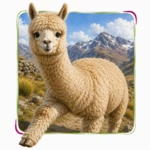
Vicuña Fact Highlight
From the full animal facts page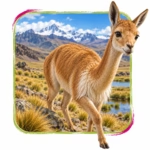
More Animal Comparisons
Pick another animal matchup and keep exploring. Compare appearances, habitats, diets, abilities, and surprising differences.




Make an Animal Story
Turn this alpaca vs vicuña comparison into a high-Andes fiber adventure with our free Animal Story Generator.
Source notes: References used for this comparison. See more See less
Try Another Matchup
Explore this comparison →