
Ouranosaurus Facts for Kids
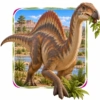
Ouranosaurus was a large plant-eating ornithopod dinosaur from Early Cretaceous Niger. It was not a duck-billed hadrosaur, but it was an iguanodontian relative from the line near hadrosaurs. Ouranosaurus is famous for its tall back spines that likely formed a sail or hump, plus a beak and plant-grinding teeth.
Quick Ouranosaurus Facts
- Animal Type: Large ornithopod dinosaur
- Group: Iguanodontian hadrosauriform
- Known For: Brave monitor lizard name, Niger fossils, tall sail-like back spines, broad beak, thumb spike, hatchlings, Early Cretaceous Africa, and plant diet
- Lived During: Early Cretaceous, about 115 to 100 million years ago
- Diet: Ferns, horsetails, conifers, cycads, seeds, flowering plants, and other vegetation
What You’ll Learn
Explore 10 fascinating ouranosaurus facts for kids about its tall back spines, thumb spikes, plant diet, strong legs, and Cretaceous Africa, plus a quiz, glossary, and activity
Easy explanations make them great for children, families, teachers, and young explorers.
10 Fun Ouranosaurus Facts for Kids
1. Ouranosaurus Was a Dinosaur
Ouranosaurus was an ornithopod dinosaur, a plant-eating group with many beaked browsers.
Kid Decode: Beak ready, plant menu open, dinosaur badge polished.
2. Its Name Means Brave Monitor Lizard
The Natural History Museum lists the name meaning of Ouranosaurus as brave monitor lizard.
Kid Decode: A bold name for a dinosaur with an even bolder back.
3. It Lived in Niger
Ouranosaurus fossils are known from Niger in West Africa.
Kid Decode: Ancient Niger was a Cretaceous river-and-plant world with giant reptiles nearby.
4. It Was About 7 Metres Long
The Natural History Museum lists Ouranosaurus at about 7 metres long.
Kid Decode: That is a plant eater with small-bus energy.
5. It Had Tall Back Spines
Ouranosaurus had elongated neural spines along its back that may have supported a sail or hump.
Kid Decode: Its back looked ready to catch every kid’s attention.
6. The Sail’s Job Is Debated
Scientists have suggested display, body temperature, fat storage, or muscle support, but the exact role of the sail is uncertain.
Kid Decode: The sail is a fossil question mark wearing a very tall hat.
7. It Was an Iguanodontian
Ouranosaurus belonged near Iguanodon-like dinosaurs, not the later hollow-crested duck-bills.
Kid Decode: Cousin of famous plant eaters, but with its own African style.
8. It Had a Beak and Teeth
Ouranosaurus used a beak to crop plants and cheek teeth to process vegetation.
Kid Decode: Clip in front, chew in back, repeat across the Cretaceous.
9. Baby Ouranosaurus Were Hatchlings
Ouranosaurus dinosaurs hatched from eggs, so babies can be called hatchlings.
Kid Decode: A hatchling Ouranosaurus had a future sail waiting in the blueprint.
10. It Shared Its World With Predators
Early Cretaceous Niger also preserved meat-eaters and giant crocodyliforms, so Ouranosaurus lived in a risky neighborhood.
Kid Decode: Plant eating was peaceful until the predators checked the calendar.
The Weirdest Ouranosaurus Fact
Ouranosaurus looked like an Iguanodon-style plant eater carrying a tall sail or hump along its back.
Try This Ouranosaurus Activity
Ouranosaurus Drawing Activity
Draw Ouranosaurus in Early Cretaceous Niger. Add a tall sail-like back, broad beak, thumb spike, strong legs, hatchling egg clue, ferns, riverbank plants, Niger fossil tag, and a “sail-backed plant eater” label.
Quick Ouranosaurus Quiz
- Was Ouranosaurus a meat-eater? Answer: No, it was a plant-eating ornithopod.
- Where was Ouranosaurus found? Answer: Niger in Africa.
- What was special about its back? Answer: Tall spines likely formed a sail or hump.
- How long was Ouranosaurus? Answer: About 7 metres long.
- What were baby Ouranosaurus dinosaurs called? Answer: Hatchlings.
Mini Glossary
- Ornithopod: A plant-eating dinosaur group with many two-legged and four-legged forms.
- Iguanodontian: A branch of ornithopods related to Iguanodon and later duck-billed dinosaurs.
- Neural Spine: A tall part of a backbone that can support muscles, ligaments, or display structures.
- Hatchling: A baby animal newly hatched from an egg.
- Early Cretaceous: The earlier part of the Cretaceous Period.
 Pheasant Facts for Kids
 Fox Facts for Kids
 Great Horned Owl Facts for Kids
 Cryptoclidus Facts for Kids
More Animal Facts for Kids
Visit the full animal facts library or explore a focused animal group.
More Extinct Animal Facts for Kids
Discover dinosaurs, Ice Age giants, prehistoric sea creatures, recently extinct species, and other animals from the past.
Fact check note: Fact checked with Natural History Museum Ouranosaurus page, PeerJ Venice specimen study, Elrhaz Formation references, and trusted iguanodontian dinosaur sources.

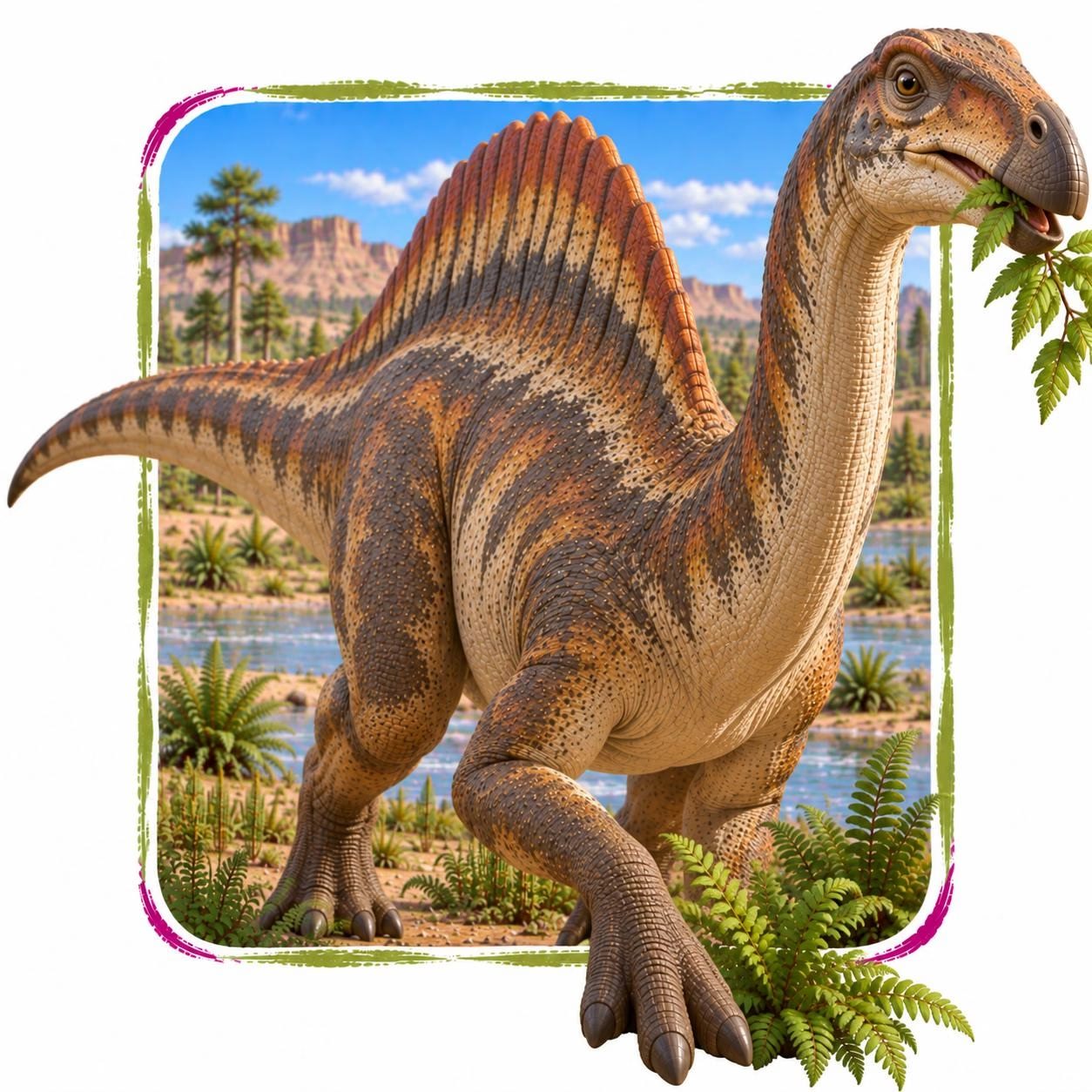
Ouranosaurus in its natural Early Cretaceous Niger floodplains, Elrhaz Formation and Gadoufaoua habitats, river margins, fern and horsetail zones, conifer woodlands, semi-arid seasonal plains, ancient Sahara waterways, and African iguanodontian browsing ecosystems habitat